Measuring Mechanical Workload Based on Work Orders Using the Workload Analysis Method and Full Time Equivalent at PT XYZ
Abstract
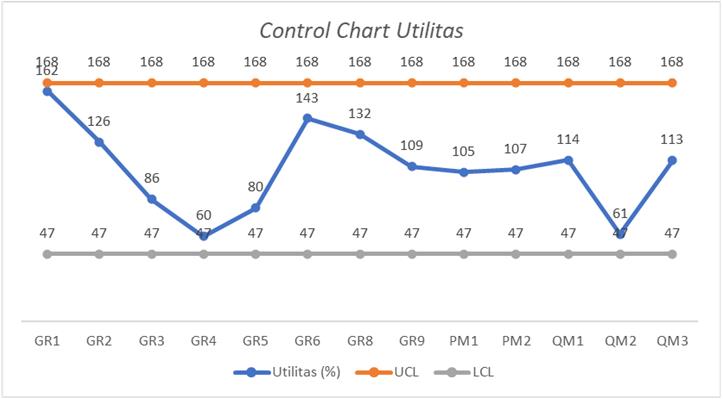
PT XYZ is a company engaged in automotive service s that provides General Repair (GR), Periodic Maintenance (PM), and Quick Service (QS) service s. The high number of service jobs recorded through Work Orders (WO) has the potential to cause an imbalance in the distribution of workloads among mechanics, so an evaluation is needed to ensure the suitability between the workload and the available workforce capacity. This study aims to measure the level of mechanic workload and determine optimal workforce requirements using the Workload Analysis (WLA) and Full Time Equivalent (FTE) methods. The study was conducted with a descriptive quantitative approach using secondary data including the number of Work Orders, job completion time, number of mechanics, and effective working hours during the observation period. The results showed that there were 277 Work Orders with a total work time of 47,850 minutes handled by 18 mechanics, resulting in an average processing time of 173 minutes per Work Order. Based on the WLA analysis, a total utility value of 105% was obtained, which indicates that the overall workload has exceeded the available work capacity. Several Stalls experienced overload conditions, namely GR1 (162%), GR2 (126%), GR6 (143%), GR8 (132%), and GR9 (109%), while GR4 (60%) and QM2 (61%) were in Underload conditions. The results of the statistical control limit analysis using a Control Chart showed that all utility values were still within the Upper Control Limit (UCL) and Lower Control Limit (LCL) ranges, so that workload variations were still statistically controlled even though the distribution was not evenly distributed. Furthermore, the FTE analysis showed that Stalls with FTE values above 1.00 required adjustments to the number of workers to reduce excessive workloads, while Stalls with FTE values below 1.00 still had work capacity that was not optimally utilized. The results of this study are expected to be a basis for companies in planning workforce needs, redistributing workloads, and increasing the efficiency of human resource utilization to support more effective and sustainable operational performance.